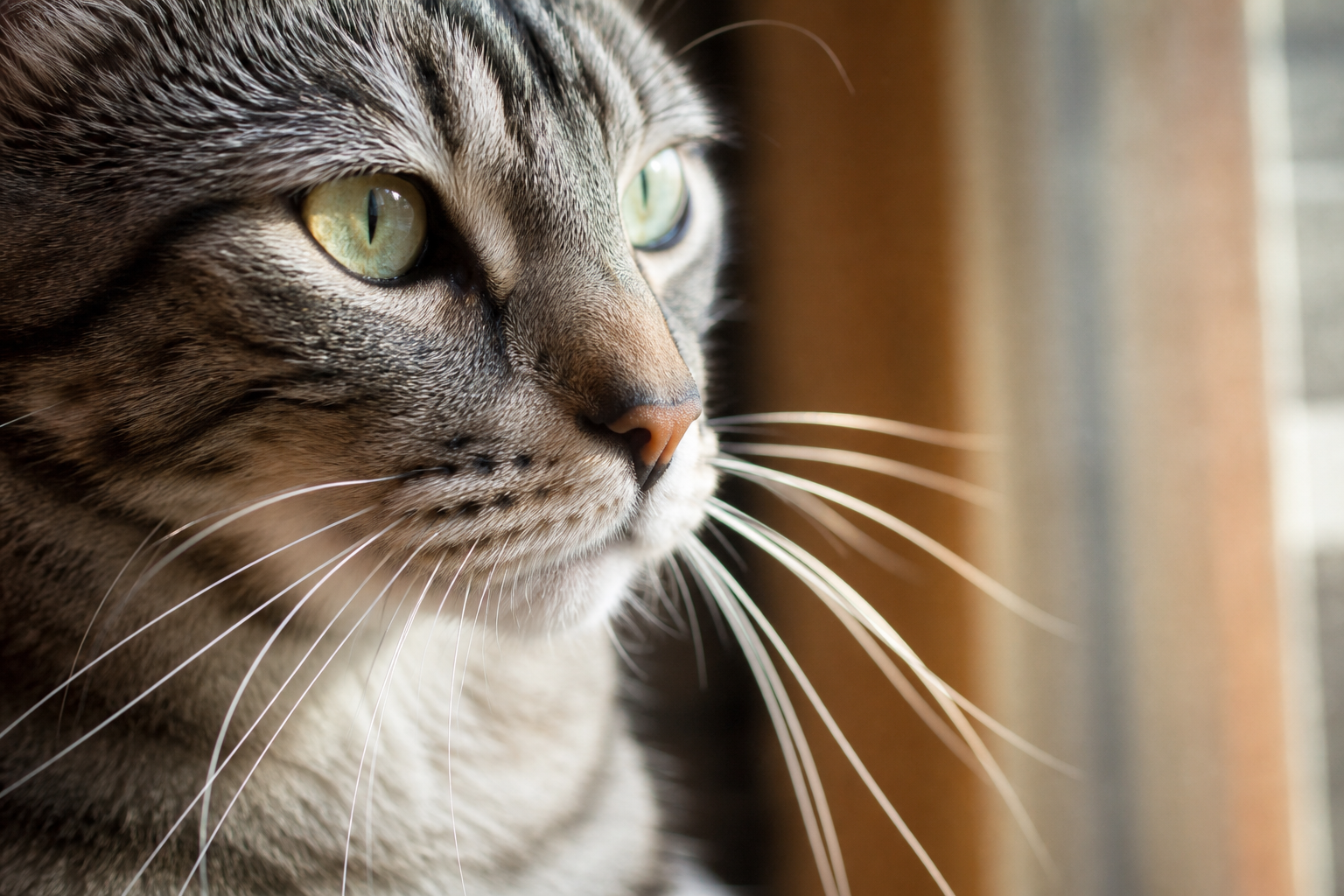
Quick answer: Cat whiskers (vibrissae) are not ordinary hairs — they are highly sensitive, nerve-rich sensory organs that work like a radar system. They help cats navigate tight spaces, hunt in the dark, sense air currents, express their mood, and protect their eyes. Because cats rely on them for balance and spatial awareness, whiskers should never be trimmed.
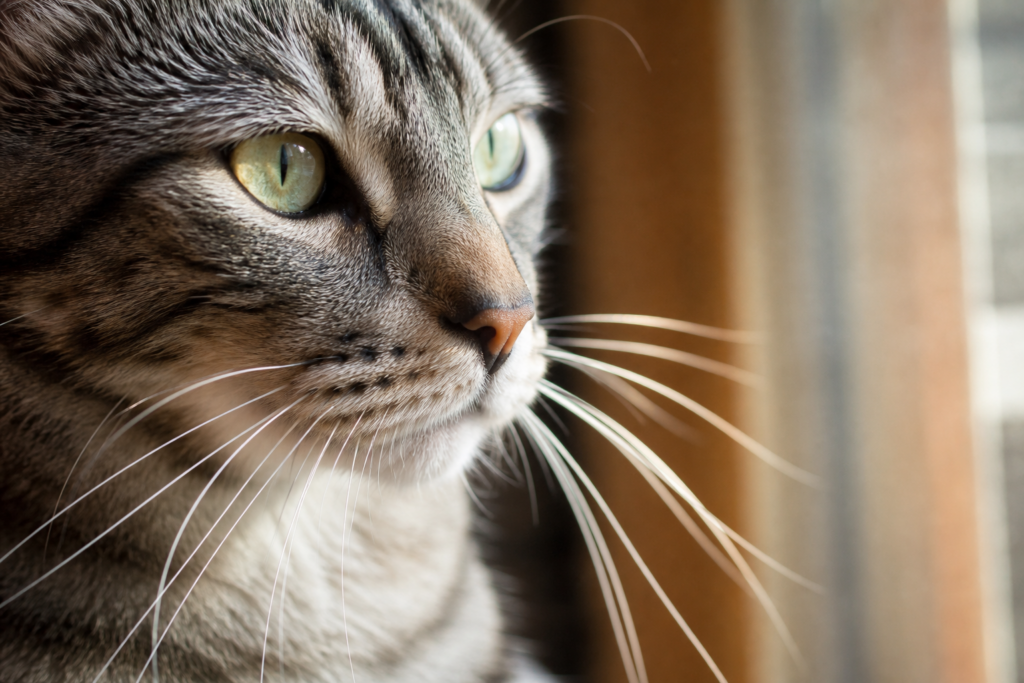
Have you ever noticed how your cat can slip through the narrowest gap, leap onto a ledge in near-total darkness, or twitch its whiskers the moment something moves across the room? None of that is luck. Cat whiskers are among the most sophisticated sensory tools in the animal kingdom — and science has a lot to say about how they work.
Whether you’re a new kitten parent or have shared your home with cats for decades, understanding what whiskers actually do will change how you see your feline friend — and how you care for them.
Whiskers, known scientifically as vibrissae, are much more than elongated hairs. According to VCA Animal Hospitals, cat whiskers are “highly sensitive and finely tuned sensory tools” that function as a sophisticated radar system for cats.
Each whisker is deeply embedded in the skin and surrounded by nerves and blood vessels, making them extremely sensitive — comparable to human fingertips. When air currents are disturbed by a nearby object, whiskers vibrate and transmit those movements directly to the brain. This is how cats detect objects and movement up close, compensating for the fact that feline vision is better suited to distance.
Whiskers serve several distinct, science-documented roles in a cat’s daily life:
Cats already have excellent night vision — but whiskers give them an extra edge. In low light, cats use their whiskers to sense the shape, size, and movement of objects around them, according to veterinarians at PetMD. By detecting tiny changes in air currents, cats can avoid bumping into furniture, sneak up on prey, and land precisely on narrow ledges. It’s close to a “sixth sense” — and it’s one reason cats seem so graceful in near-total darkness.
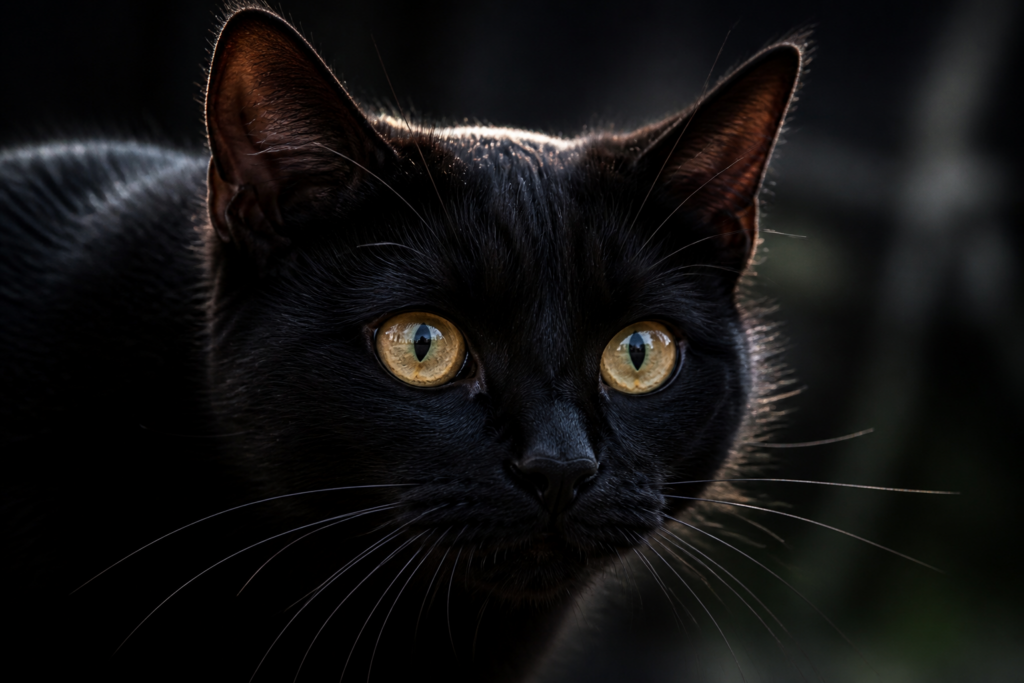
Learning to “read” whiskers is one of the easiest ways to understand your cat’s emotional state:
| Whisker position | What it usually means |
|---|---|
| Loose, out to the side | Relaxed and content |
| Pointing forward | Alert, curious, or focused |
| Pulled back tightly against the face | Scared, angry, or defensive |
| Elevated slightly | Happy or interested |
Combine whisker reading with ear and tail position, and you’ll quickly become fluent in feline body language.
You may have heard the term whisker fatigue — the idea that repeated contact with deep, narrow bowls or other everyday objects can overstimulate a cat’s sensitive whiskers and cause stress or discomfort.
Importantly, whisker fatigue is not an illness or a disease, as PetMD explains — it’s thought to occur when everyday contact overloads the whiskers’ sensory system. A 2024 study published in the NIH’s PMC database specifically evaluated whisker stress in cats and highlighted wide, shallow bowls as the design that minimizes contact with sensitive whiskers. If your cat paws at its food, flicks kibble out of the bowl, or seems hesitant to eat, a wider, shallower bowl is a simple, science-supported first step.
| Myth | Fact |
|---|---|
| Whiskers are just thick hairs — trimming them is harmless | Whiskers are nerve-rich sensory organs. Trimming disorients cats, impairs balance and spatial awareness, and can cause stress — like being suddenly blindfolded |
| Pulling out a whisker is no big deal because it grows back | Whiskers do regrow, but they are deeply rooted and highly sensitive. Pulling is painful and stressful — never pull a cat’s whiskers |
| Whiskers only grow around the nose | Cats also have whiskers on their eyebrows, chin, and the backs of their front legs (carpal vibrissae), which help detect movement below them |
| All cats have the same whisker setup | Every cat has a unique whisker pattern — like a fingerprint. Most cats have about 24 cheek whiskers (12 per side), and some hairless breeds may have very few or none |
| Whiskers help cats see in the dark | Partly true — they don’t see with them, but whiskers sense air currents and object proximity, acting as a radar system that complements night vision |
Whisker care is simple — most of it comes down to what not to do:
Some whisker loss is completely normal. But sudden or excessive whisker loss can be a sign of an underlying issue:
If you notice widespread whisker loss, inflamed skin around the whisker pads, or changes in appetite or behavior alongside whisker problems, a veterinary check-up is the right next step.
Do cat whiskers grow back? Yes. Whiskers follow a natural shedding and regrowth cycle. Most cats replace their complete set every few months, though regrowth can take several weeks.
Why should I never cut my cat’s whiskers? Whiskers are essential for balance, spatial awareness, and a cat’s sense of direction. Trimming them can leave cats stressed and disoriented — veterinarians describe it as like suddenly being blindfolded.
Are whiskers painful for cats? Whiskers themselves are not painful, but they are extremely sensitive — comparable to human fingertips. That’s why deep bowls that brush against them repeatedly can cause stress, and why pulling them is so unpleasant for cats.
Do hairless cats have whiskers? Some do, and some don’t. Certain breeds — including some hairless breeds — may be born with very few or no whiskers at all, according to VCA Animal Hospitals.
Do dogs have whiskers too? Yes. Dogs also have sensitive whiskers that act as a radar system, though they generally tolerate gentle touches better than cats do.
Can I tell my cat’s mood from its whiskers? Largely, yes. Relaxed whiskers point loosely out to the side, alert whiskers point forward, and fearful or angry whiskers pull back tightly against the face.
Whiskers aren’t just a charming feature — they’re a window into how your cat experiences the world. The more you understand about these remarkable sensory organs, the better you can support your cat’s comfort, confidence, and well-being at home. Watch how your cat uses its whiskers today — you’ll see a radar system in action, and a cat that’s far more remarkable than you realized.
Sources:








Leave a comment