Everyone tells you that adopting a pet will change your life. Nobody warns you that the cat you adopt might be the one who saves yours instead.
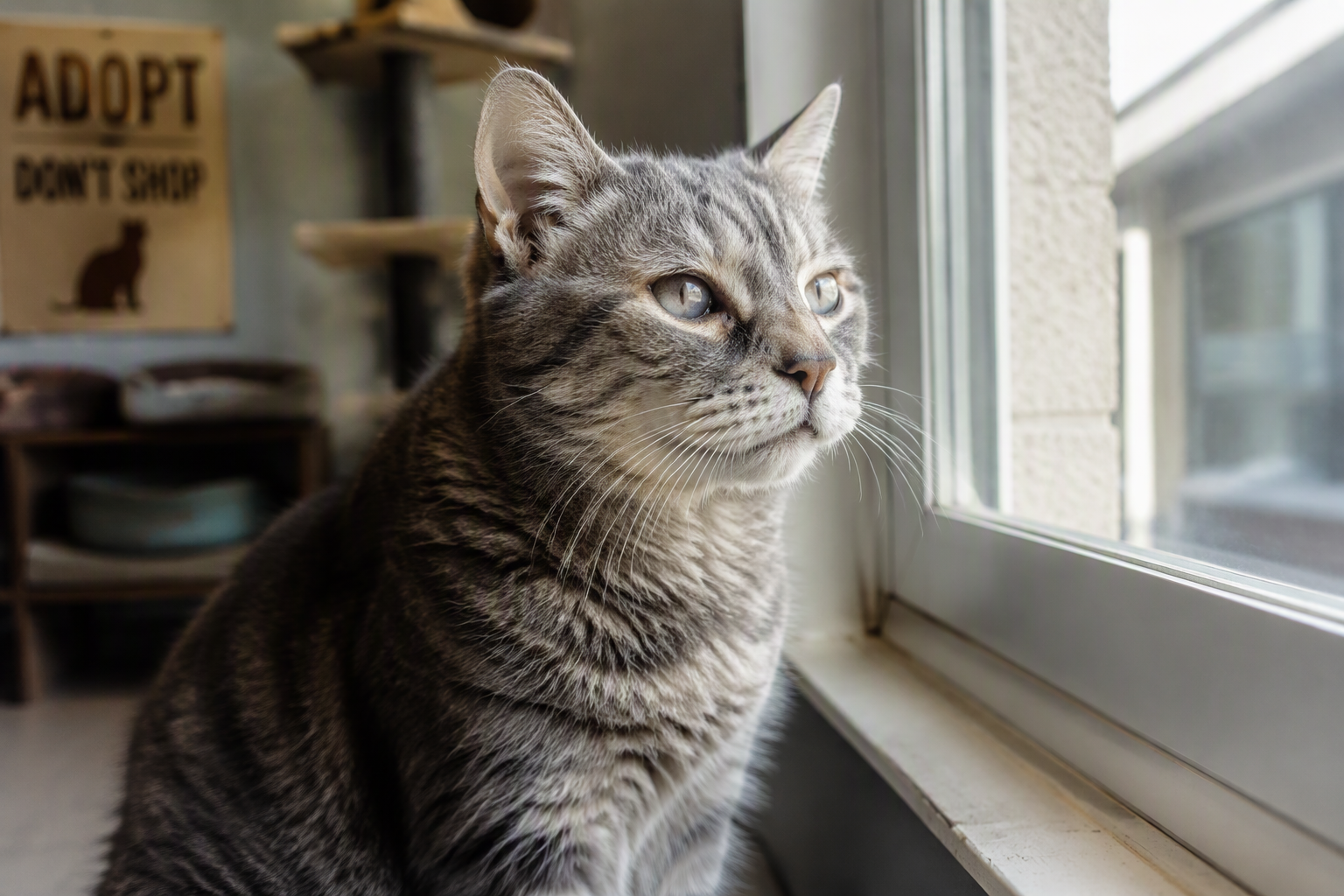
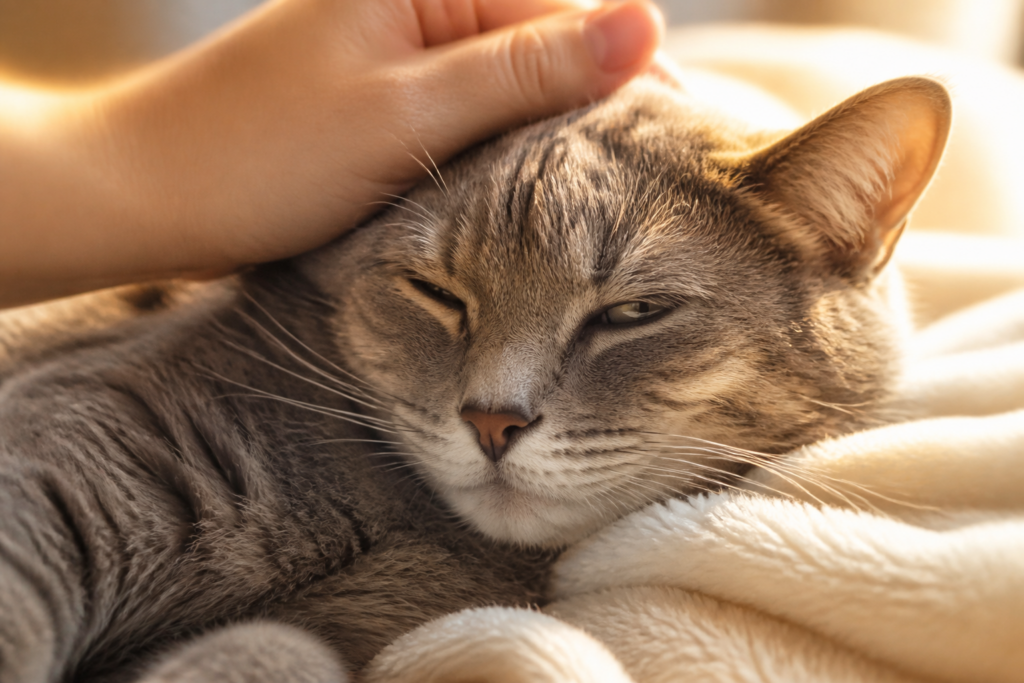
This is the story of how I adopted a 12-year-old shelter cat named Maple — a small gray tabby with cloudy eyes and a crooked tail — and how she turned the worst year of my life into the best one. It’s a story about second chances, in both directions. And if you’ve ever wondered whether adopting a senior cat is worth it, I hope what happened to us helps you decide.
“Nobody warns you that the cat you adopt might be the one who saves yours instead.”
I lost my job in March. It wasn’t dramatic — a Tuesday morning video call, a HR representative reading a script, the screen going dark. Seventeen minutes later I was unemployed for the first time in my adult life, sitting at a desk that no longer felt like mine.
My relationship ended in April. Also not dramatic. Just quiet, the way big endings usually are — two people agreeing, almost politely, that whatever we’d had was already gone.
By May, I was standing in an empty apartment in a city where I knew exactly two people, staring at boxes I didn’t have the energy to unpack. I’d taken a job that existed only on paper — a start date that kept drifting — and moved into a place where my voice echoed when I said anything at all. The silence was the worst part. Not sad-silence. Empty-silence. The kind that makes you realize how much of your life was other people, and how little was left when they were gone.

I wasn’t looking for a cat. I want to be clear about that, because people assume adoption stories start with intention. Mine started with avoidance. A friend who’d heard the silence in my voice suggested I “go somewhere with living things in it.” I went to the animal shelter the way you do something pointless on a bad day — just to be somewhere that wasn’t my apartment, just to look at animals who seemed to have their own problems.
Maybe that’s the real reason any of us end up there. The animals aren’t the only ones who need a place to belong.
The kitten room was chaos — the good kind. Tiny paws, tiny meows, families crouching and laughing, phones out, “which one do you want, sweetie?” filling the air like confetti. I stood in the doorway for a moment, watched a little girl fall in love with a tabby kitten in about four seconds flat, and walked past the whole scene.
I kept going, down the row of older cats, where the lights are quieter and the cages are calmer and nobody’s taking photos.
That’s where I saw Maple.
Her card was taped to the kennel door, typed in the flat language shelters use: Maple. Female. Domestic shorthair. 12 years. Gray tabby. Returned twice. In the shelter 8 months. No photo. No “I’m playful!” or “I love chin scratches!” stickers. Just the facts, and the facts were not doing her any favors.
She sat at the back of her kennel — not at the front, not begging, not pacing. Just sitting, watching me with calm, ancient eyes that had clearly seen more of the world than I had. Something about the stillness of her stopped me. Everyone else in that building was performing for adoption. Maple was simply waiting.
The volunteer who unlocked her door was a woman in her sixties with kind hands. She said something I haven’t forgotten in all the years since: “People walk right past her. They want the kittens — they want the years. Nobody wants to take home a cat who might not have many years left.”
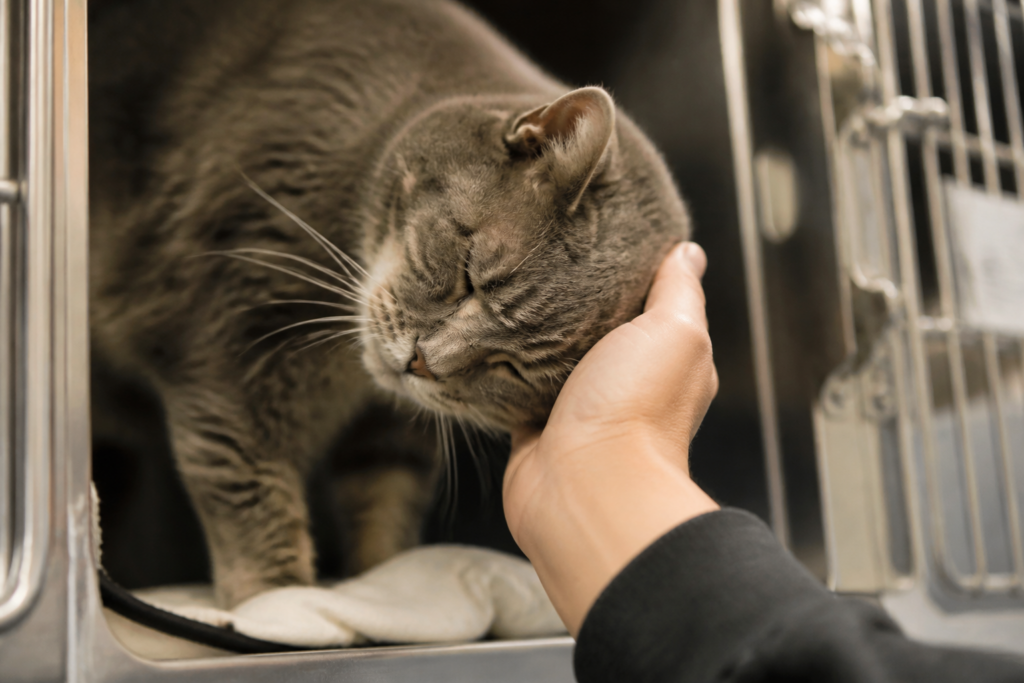
I crouched down. Maple didn’t purr. Didn’t rub against the bars. Didn’t do any of the things cats do to make you fall in love with them. She just studied me for a long moment, her head tilted like she was reading something written on my face. And then she did the one thing that undid me completely:
She pressed her head, slowly and deliberately, into my hand.
That’s it, I said. I’ll take her.
The volunteer blinked. “Are you sure? She’s twelve. She’s been returned twice.” Returned twice. I’d heard it on the card, but hearing it out loud was different — a small cat, brought back to this place not once but twice, by people who’d decided she wasn’t worth keeping.
“I’m sure,” I said. “I’m a return, too.”
The paperwork took an hour. There was a spay certificate from eight years ago, a vaccination record, and a note in the file that said, in the shelter’s careful handwriting, “Does well in quiet homes. Prefers to approach on her own terms.” I signed everything, carried the cardboard carrier out to my car, and drove home with a 6-pound stranger in the passenger seat who had not made a single sound the entire way.
I’d like to tell you we bonded instantly. We didn’t.
Maple spent the first eight hours under the couch. Not exploring. Not investigating. Under the couch, where the shadows were safest. I put out food and water, showed her where they were, and then sat on my hands on the other side of the room so I wouldn’t try to force it. My friend called to ask how it was going. “She hates me,” I said. “She’s hiding.” Give her time, my friend said. She’s learning that the floor is safe.
I spent the evening pretending to watch television while watching the space under the couch instead. Around eleven, Maple appeared at the edge of the shadow, looked at me, and retreated. At midnight, I did something I hadn’t let myself do in months.
I sat down on the floor of that bare living room — boxes stacked against one wall, one lamp, one cat under the couch — and I cried. Not the polite kind. The kind that comes up from somewhere deep and takes a while to finish. I cried about the job and the relationship and the empty apartment and the fact that I’d just adopted a 12-year-old cat I couldn’t even afford to feed properly and what kind of person does that, adopts a senior cat in the middle of their own collapse?
I don’t know if she heard me. I don’t know if she felt the vibration of it through the floorboards, or smelled the salt, or simply decided, at that exact moment, that the moment was right.
But Maple came out from under the couch.
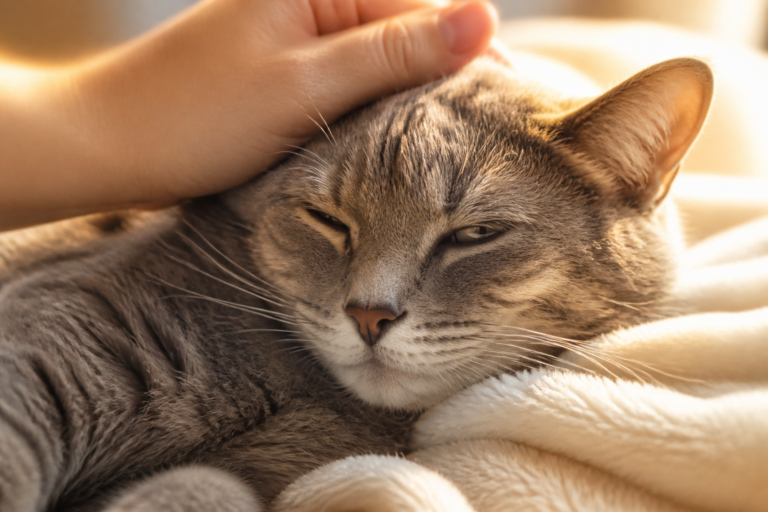
She walked across the room like she’d owned it her whole life — unhurried, unbothered, tail up — and she curled up against my side. Not on me. Against me. Her whole body pressed along my hip, her head on my knee, like she’d been doing it for years.
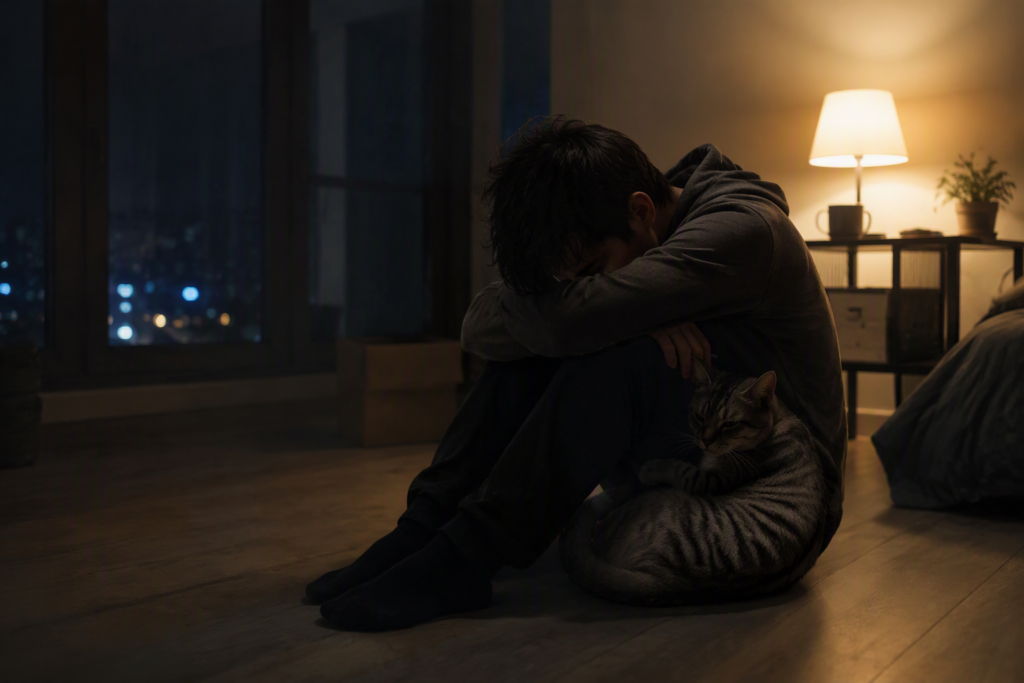
I put my hand on her back. She started to purr — the first time I’d ever heard her do it. It was a small, rusty sound, like an engine that hadn’t been started in a long time but remembered how.
I sat on that cold floor with a 12-year-old cat pressed against me, and for the first time in months, the apartment didn’t feel empty. It felt like a beginning.
Maple and I built a routine the way you rebuild anything — one small brick at a time, on top of the last one, until the wall is taller than you thought it could get.
She followed me to the bathroom every morning, supervising from the bathmat like a small, judgmental foreman. She claimed the one patch of sun on the living room floor as her official property — no exceptions, no negotiations. She learned my schedule before I did, appearing at the kitchen doorway at exactly 6:15 every evening, because apparently 6:15 was dinner time and I was simply the last to know.
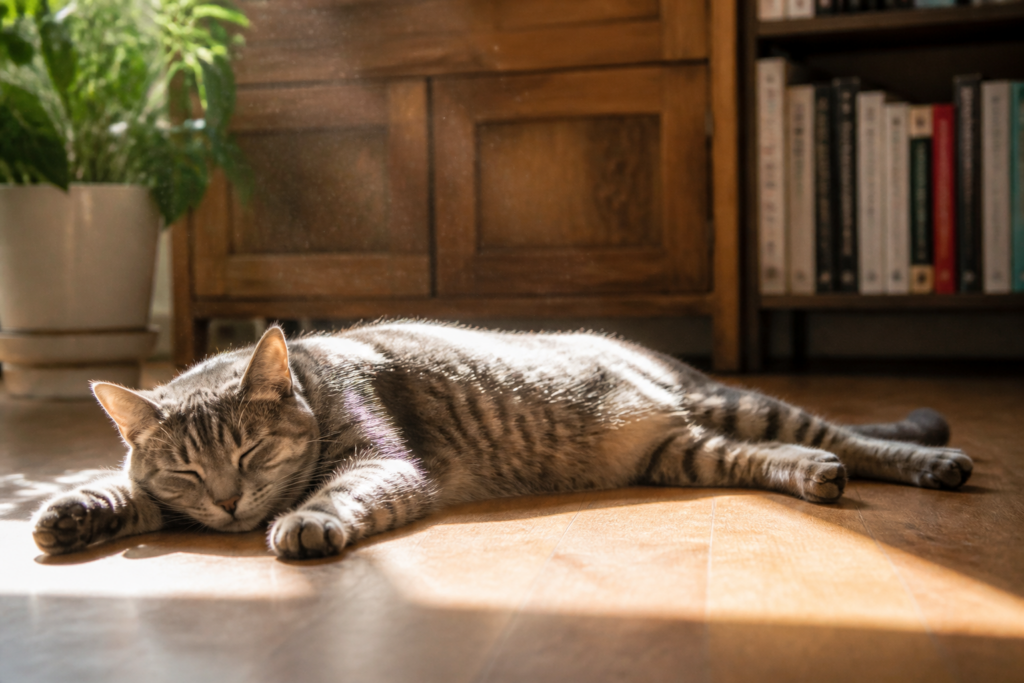
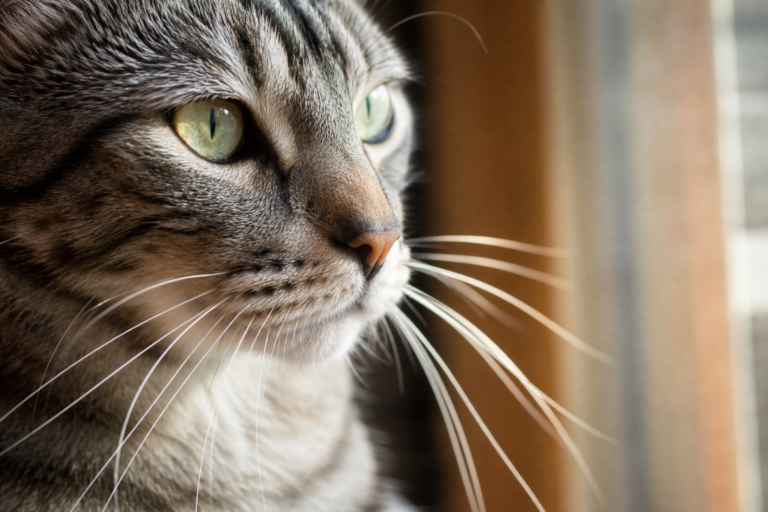
The small things became the whole world. The way she’d tap my leg once, politely, when she wanted attention. The way she waited for me at the door when I came home, even though I’d been gone an hour. The way she’d chirp at birds from the windowsill — a sound entirely different from her purr, and entirely hers.
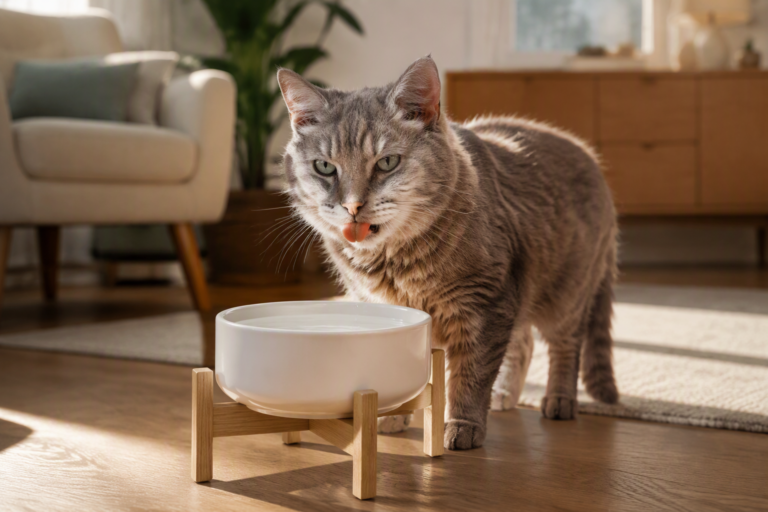
Her appetite was finicky at first — seniors eat differently, need smaller meals, easier access — so I read everything I could find, including our own journal’s guide on why elevated slow feeder bowls are a game-changer for a senior cat’s health, and switched her to smaller, more frequent meals she could manage on her own terms. Watching her eat comfortably felt like watching her stand up for herself. It was the smallest thing and it mattered enormously.
At night, she slept on my chest. Not beside me — on me, right over my heartbeat, like she was checking that I was still there. The weight of her was the most reassuring thing I’d ever felt. I started falling asleep to the sound of her purring, that rusty little engine, and somewhere along the way I stopped counting the days I’d been unhappy and started counting the days I’d had Maple.
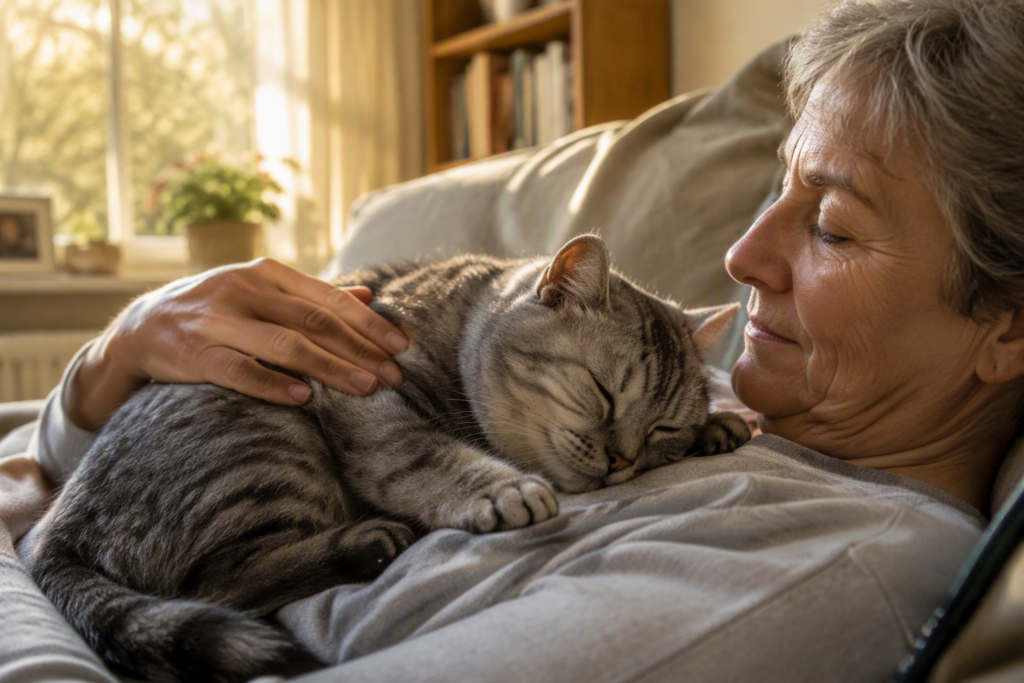
The strange thing about that first year is how much of it was ordinary. Nobody tells you that healing looks like this: a cat following you to the bathroom, a sun patch, a 6:15 dinner appointment, a heartbeat under a purr. You expect big moments. What you get is a thousand small ones, stacked so close together you don’t notice the wall getting taller.
I’m not going to pretend a cat fixed me. That’s not how any of this works, and pretending otherwise does a disservice to both therapy and cats.
But the science is real. Research published in the NIH’s PMC database on the psychosocial and psychophysiological effects of human-animal interaction points to the activation of the oxytocin system as a key mechanism behind the calming effects people report from time with companion animals — the same bonding hormone involved in human attachment. Other peer-reviewed work documents that companion animals contribute positively to reducing stress, anxiety, and depression in many people.
The honest version: a pet is not a treatment. A pet is a reason. Maple gave me a reason to get out of bed at 6:15, a reason to keep the apartment clean, a reason to be less alone — and the research suggests that this kind of everyday companionship, the ordinary magic of another heartbeat in the room, is exactly the mechanism that helps.
Seven months in, I came home from a job interview to find her lying in the hallway, barely moving.
Not sleeping. Lying. Flat, on her side, her breathing wrong — shallow and fast and effortful. Her eyes open but not tracking me. I’ve never grabbed a carrier faster in my life.
The vet’s office was fifteen minutes away. I drove it in what felt like forty seconds. Maple, who had not made a sound in the car since the day I brought her home, was silent again — and this time the silence was terrifying.
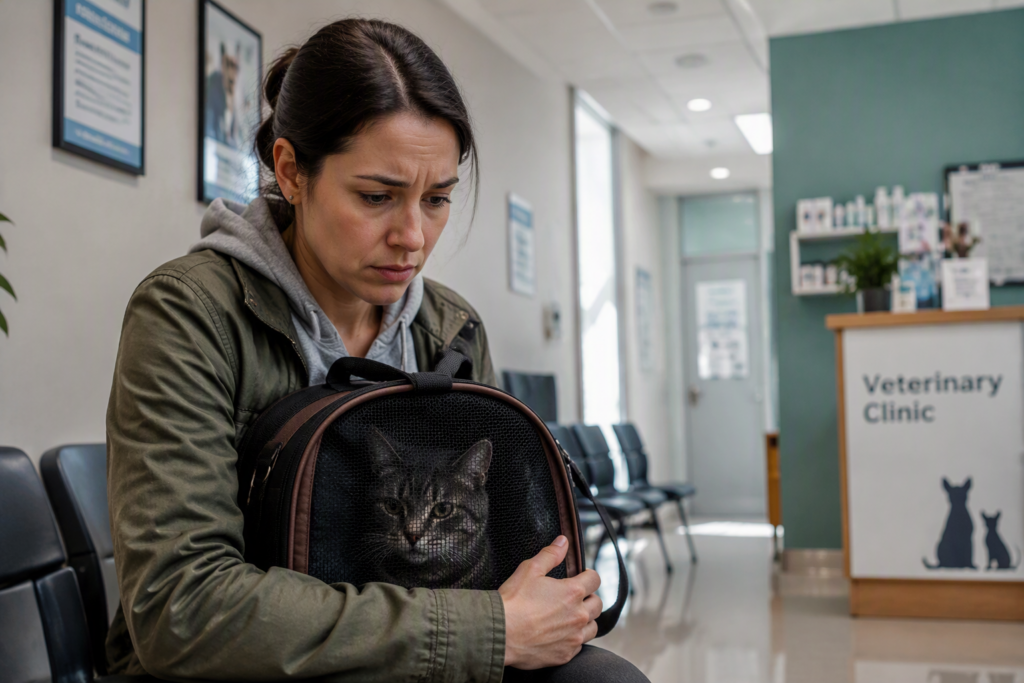
The diagnosis came fast: a urinary blockage. Common in senior male cats, the vet said, dangerous if it’s ignored, treatable if it’s caught — which meant, thank God, that we’d caught it in time. They’d keep her overnight. They’d call me. There was nothing I could do except wait.
I sat in my car in the clinic parking lot for four hours. Not the waiting room — the car, alone, because I couldn’t stop crying and I didn’t want anyone to see. I bargained with the universe. I made deals with a God I wasn’t sure I believed in. And somewhere in hour two, I realized something that rearranged me from the inside out:
This small gray cat — this returned-twice, twelve-year-old, crooked-tailed creature who slept on my chest every night — had become the center of my world.
I’d spent years telling myself I was fine on my own. I was not fine on my own. I had just never had anyone worth being not-fine with.
Maple came home the next morning, groggy but alive, wrapped in a blanket. The vet said she’d be okay — she’d need prescription food, regular check-ups, and a quiet life, which was, conveniently, exactly what we’d built. I carried her inside and set her down in her sun patch. She looked at me with those ancient, patient eyes, like I was the one who’d been in danger.
She was right. I think I had been.
People ask me all the time why I didn’t adopt a kitten. Why would you take on an old cat? What’s the point?
Here’s what I know now, and what the data backs up:
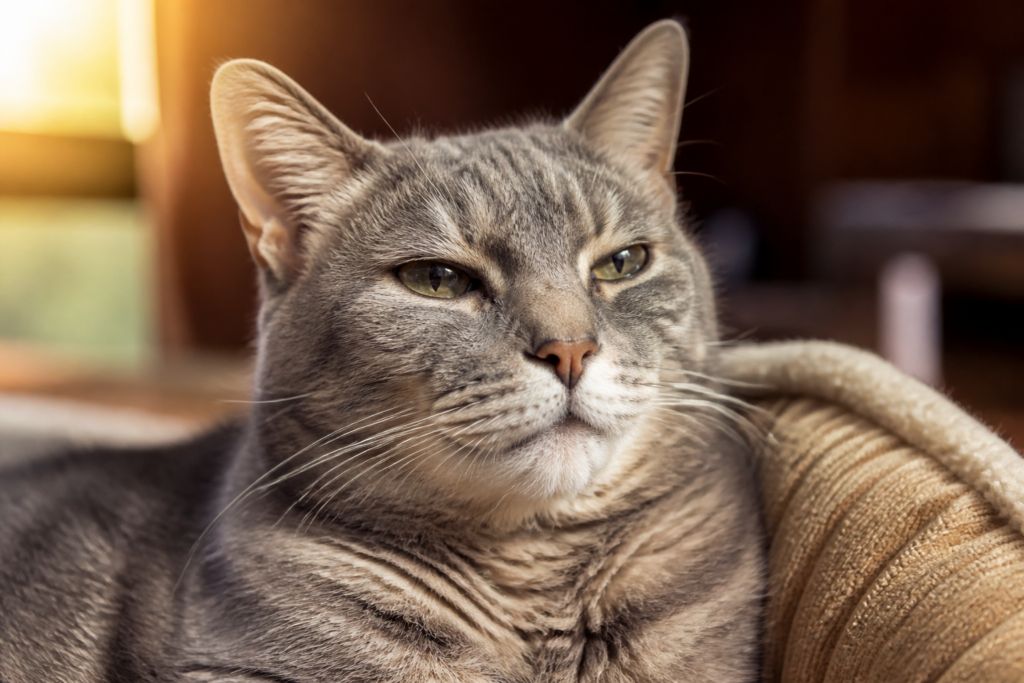
If you’re weighing the two, here’s a fair breakdown:
| What matters | Senior cat | Kitten |
|---|---|---|
| Personality | Already known — calm, settled, predictable | Still forming — energetic, unpredictable |
| Energy level | Low to moderate — naps are a lifestyle | Very high — needs play, training, supervision |
| Training needed | Minimal — usually litter-trained and polite | Full onboarding — litter, scratching, boundaries |
| Bonding | Deep, quiet, immediate for the right person | Gradual, playful, high-effort |
| Care needs | Comfort adjustments, senior check-ups | Vaccines, socialization, kitten-proofing |
| Shelter odds | Adopted at ~25% — waits longest | Adopted fast — the popular choice |
| The years you get | Fewer, but present — and they count | More, but no guarantee of “more” |
| What they give back | Undivided, grateful devotion | Chaos, joy, and a lifelong project |
I’m not saying kittens are bad. I’m saying one of these columns is desperately waiting for someone, and it isn’t the popular one.
If you’re considering adopting a senior cat, here’s my honest advice, earned the slow way:
Is it worth adopting a senior cat? Yes. Senior cats are calm, grateful, and deeply loving. Their personalities are already formed, so what you see is what you get — and what you get is usually a devoted companion who’s past the chaos and ready for the quiet parts of life.
Do senior cats bond with new owners? Absolutely. ASPCA notes that age is not a determining factor in bonding. Maple bonded with me within the first 24 hours — she just needed someone to sit still long enough to notice her.
How long do senior cats live? With good care, many cats live well into their late teens or early twenties. Adopting a 12-year-old cat can still mean years of companionship — Maple and I got two of the best years of my life, and plenty of people get far more.
Are senior cats harder to care for? In some ways they’re easier — they’re calmer, more predictable, and past the destructive phase. They may need comfort adjustments (easier-to-reach bowls, low-sided litter boxes, soft beds) and regular veterinary check-ups, but daily care is simple and mostly consists of being present.
Why do people overlook older cats at shelters? Kittens are adorable, and people fear “not having enough time” with an older pet. The result is that senior pets are adopted at only about a quarter of the rate of younger ones — which means the cats who need homes most are the ones who wait longest.
Will a senior cat be affectionate? Many are — often more so than kittens, who are too busy playing to cuddle. Maple never left my side from the first night onward. Senior cats have usually figured out exactly what they want, and what they want is almost always proximity to someone they trust.
Do senior cats get along with other pets? It depends on the individual cat, which is exactly why adopting a senior has an advantage — shelters usually know how the cat behaves around other animals, so you can choose with information instead of guesswork.
What should I know before bringing a senior cat home? Give them space, be patient, ask the shelter everything, and make small comfort adjustments from day one. And don’t be surprised if, somewhere in the first week, you realize the cat has adopted you far more thoroughly than you adopted her.
I didn’t rescue Maple. She rescued me — from an empty apartment, from a year I couldn’t get through on my own, from the quiet belief that nobody needed me.
Now, when people ask me what changed my life, I don’t talk about the new job or the new city. I point to a small gray tabby with a crooked tail who sleeps on my chest every night, purring like a rusty engine, reminding me that home isn’t a place. It’s a living thing that chooses you.
“Home isn’t a place. It’s a living thing that chooses you.”
Have you ever adopted a senior pet? Tell us your story in the comments below — we read every single one, and we reply. And if you’ve been thinking about giving an older cat a second chance: this is your sign. Somewhere, in a quiet row at a shelter, a Maple is waiting for the person who needs her as much as she needs them.
Written by the KittenRealm Pet Care Team — a true-to-life story from our community, fact-checked against ASPCA, PetMD, and peer-reviewed research. Sources below.
Sources:







Leave a comment