Quick answer: Cats purr for many reasons — not just happiness. A purr is a low-frequency vocalization produced as air moves over the voice box, typically vibrating at 25–150 Hz. Cats purr when they’re content, but also when they’re stressed, anxious, in pain, or ill — it can be a self-soothing signal, a greeting, or a way to ask for attention. And in 2023, scientists discovered the mechanism behind purring is stranger (and simpler) than anyone thought.
That soft, rumbling sound is one of the most recognizable things about cats — and one of the most misunderstood. For decades, we’ve been told a purring cat is a happy cat. The science tells a richer, more fascinating story.
Purring isn’t just a sign of contentment. It’s a complex vocalization with multiple meanings, a mechanism that surprised researchers in 2023, and — possibly — a built-in healing tool. Here’s what science actually knows about the purr.
A purr is a low, continuous vibration produced by a cat with its mouth closed. According to veterinarians at PetMD, a purr is created as air is forced over the glottis — the opening between the vocal folds in the voice box — which opens and closes in rapid cycles of 20 to 40 milliseconds.
The most distinctive feature of a purr? It’s continuous. Cats produce the vibration while inhaling and exhaling, with only a brief pause between the two phases, which is why a purr can rumble on for minutes at a time.
Researchers have recorded purring frequencies ranging from about 25 to 150 Hz — a low, deep range that sits at the very bottom of what our ears can appreciate.
For a long time, scientists assumed purring required rapid, active muscle contractions in the larynx — muscles firing dozens of times per second. Earlier theories even suggested the sound came from blood flow pulsing through a major vein.
Then, in 2023, a team led by researchers at the University of Vienna published a landmark study in the journal Current Biology. By isolating cat larynges and passing air through them, they discovered that purring can be produced without cyclical neural input or muscular contractions at all.
The secret? Small masses of connective tissue — up to 4 mm in diameter — embedded within the vocal folds. These fibrous pads make the vocal folds vibrate on their own at purring frequencies (25–30 Hz) when air flows past, like a reed in a wind instrument. The researchers noted the mechanism is functionally similar to the “vocal fry” register humans use in speech and singing.
In other words: the purr may be much less “effortful” for cats than we once believed — a remarkable, low-energy design that lets a small animal produce a deep, resonant rumble.
According to Dr. Wailani Sung (MS, PhD, DVM), writing for PetMD, purring can mean very different things depending on the situation:
The takeaway: context and body language matter more than the sound itself.
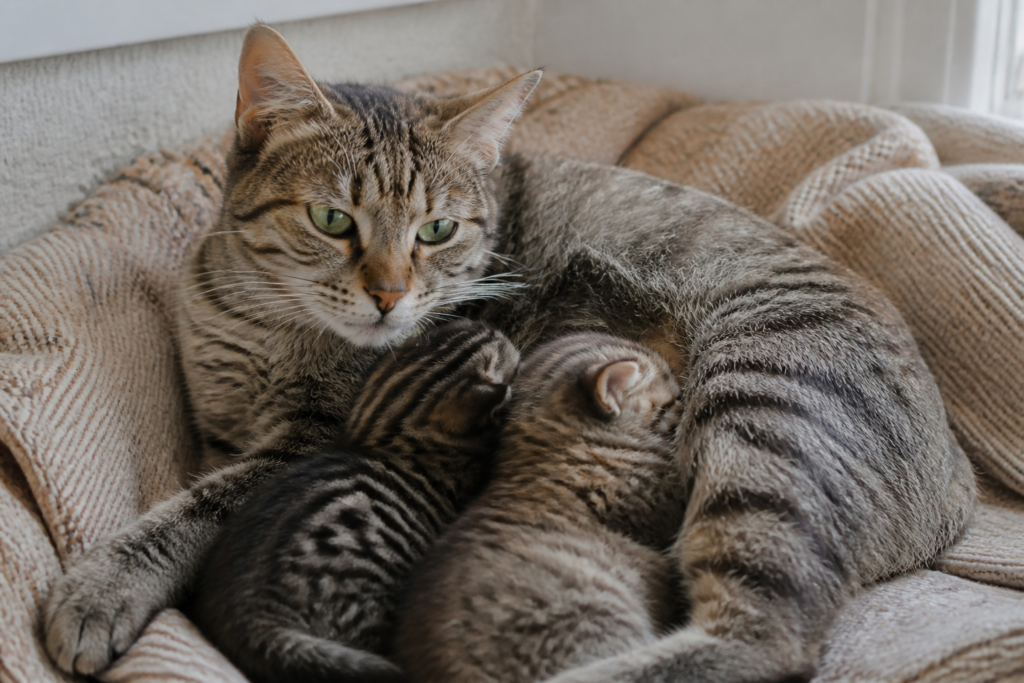
Purring starts remarkably early. Kittens can purr as young as two days old — before their eyes even open. They purr while nursing from their mother, pausing only long enough to swallow.
International Cat Care explains that the behaviour stems from kittenhood: a mother cat returns to the den and quietly purrs to signal that all is well, avoiding the attention of predators, and her kittens purr back while suckling. It’s a private, low-volume communication channel between mother and kittens — one that persists in adult cats in surprising ways.
One of the most intriguing theories is that purring has healing properties. Here’s what’s known:
It’s important to be clear: the “healing purr” remains a hypothesis, not a proven fact. The frequency overlap is real and intriguing, but scientists are still studying what — if anything — the vibration actually does. What’s better established is the emotional effect: humans consistently find purring calming.
Cats have learned to weaponize the purr — in the friendliest way possible. Researchers have identified a special “solicitation purr” that cats use when they want food or attention. Inside the ordinary low purr, there’s a higher-frequency cry, somewhat like a meow — a sound that resembles a kitten’s isolation cry or a human baby’s distress cry.
Since humans are naturally sensitive to baby-like cries, we respond to it almost reflexively. That’s why your cat’s purr at 7 a.m., when it’s time for breakfast, sounds different from the contented rumble on your lap at night — and why it’s so effective at getting your attention.
| Myth | Fact |
|---|---|
| A purring cat is always happy | Purring also occurs during stress, pain, illness, and even at the end of life. Body language is the real indicator |
| Purring requires rapid muscle contractions dozens of times per second | The 2023 Current Biology study showed fibrous tissue in the vocal folds can produce purring without active muscle contractions |
| Only domestic cats purr | Many members of the cat family purr — purring isn’t unique to house cats |
| A sick cat that purrs must be fine | Purring can be a self-soothing signal during illness; watch for hiding, poor appetite, or changed behavior |
| Purring is proven to heal bones and tissues | The frequency overlap with therapeutic ranges is real, but the healing hypothesis is still being studied — not confirmed |
To decode a purr, look beyond the sound:
Purring alone is rarely a reason to worry. But if your cat purrs while also showing signs of pain or illness — hiding, loss of appetite, lethargy, avoiding touch, changes in grooming, or sudden changes in how often they purr — it’s worth a veterinary check-up. A purr can mask discomfort, so never assume a purring cat is automatically fine.
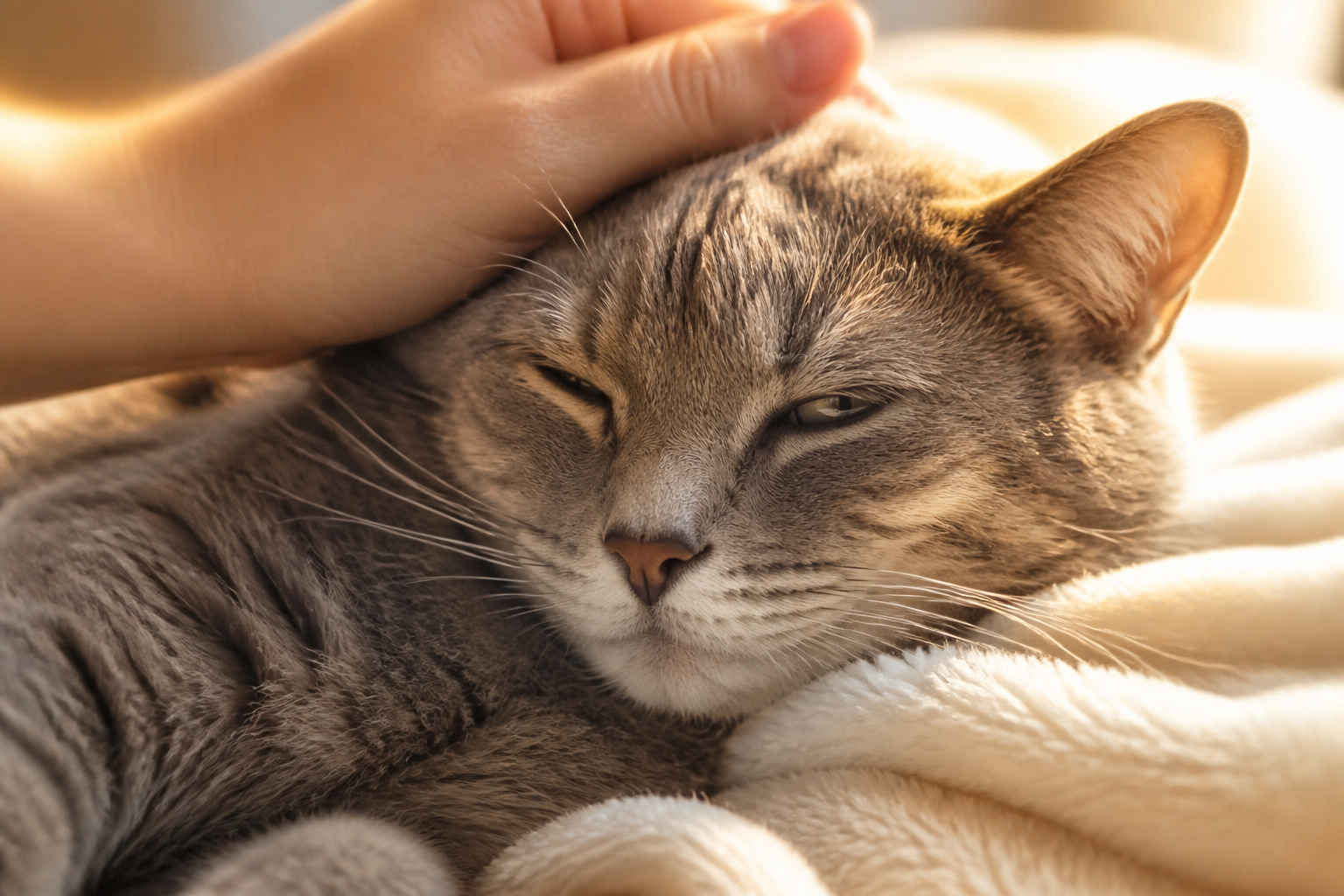
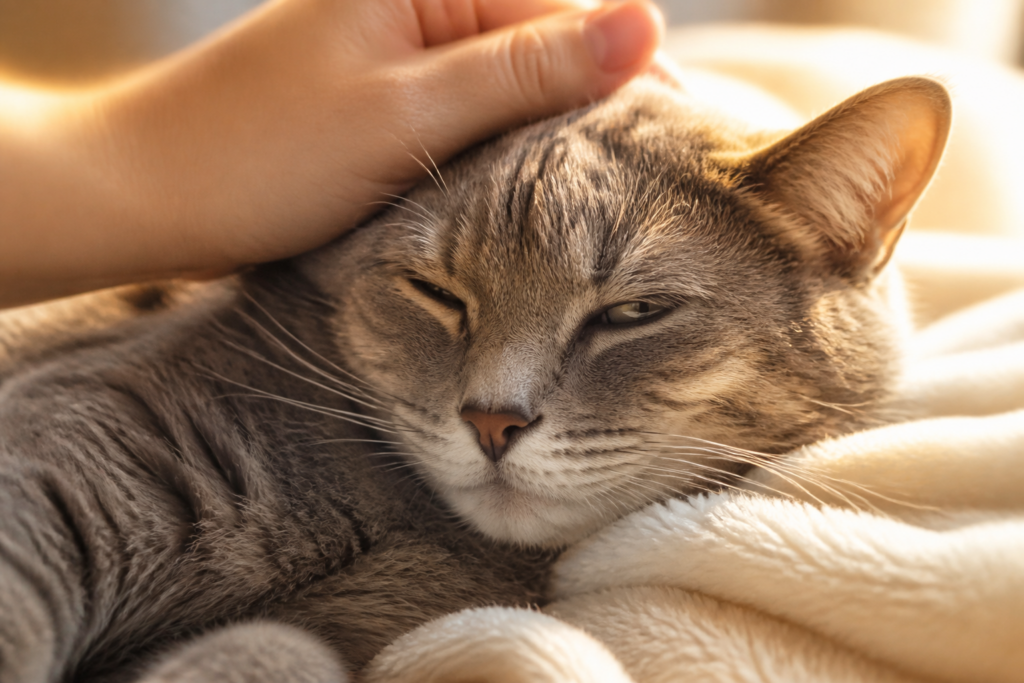
Why does my cat purr when I pet them? It usually means your cat likes the interaction — and may be signaling you to continue. A relaxed posture and half-closed eyes confirm the positive context.
Why do cats purr when they’re sick or in pain? Purring in illness may be a self-soothing behavior or a way of asking for care. International Cat Care notes the frequency of a sick cat’s purr may even differ from a healthy one.
Can cats purr while breathing in and out? Yes — that’s what makes a purr continuous. The vibration runs through both inhale and exhale, with a brief pause between phases.
Do big cats purr? Many larger members of the cat family can generate purring vibrations. Purring is not unique to domestic cats.
Why is my cat’s purr sometimes mixed with a little cry? That’s the “solicitation purr” — a higher-frequency cry embedded in the purr that resembles a kitten or baby cry, designed to grab human attention for food or care.
Is my cat happy when purring? Often, yes — but not always. Check the context: a relaxed cat in your lap is very likely content; a crouched, tense cat purring may be stressed or unwell.
Science is still unraveling the purr — and every new study adds another layer to a sound we’ve taken for granted for thousands of years. It’s a communication channel from kittenhood, a possible self-healing mechanism, and one of the most calming sounds in nature.
Next time your cat curls up and starts to rumble, you’ll know: you’re not just hearing contentment — you’re hearing one of the most fascinating acoustic feats in the animal kingdom.
Sources:







Leave a comment